
Doing Creative Work for God, Not for Clicks
There's a special moment I look for in every project.
Creative work for God starts, for me, with a question that pops up right after a project finally works: what is the point of it all?
It's when the thing finally works. The form you fill out sends correctly. The page loads quickly. The picture looks exactly how I imagined it. The email looks perfect on a phone and on a computer. Everything fits together, and for a short time, it feels like the world is a little bit better than it was before.
I love that feeling. I've loved it most of my life—whether I'm using a camera, writing computer code, or doing anything else.
But lately, a quieter question pops up right after that good feeling.
What is the point of it all?
We Can Make Anything Now
Today, it's easier than ever to make things.
I can design a website, write the words for it, take and fix pictures, make a video, create an email, plan when things will be posted, and see how many people click—all from my computer on my kitchen table. AI can write a paragraph faster than I can pour coffee. A ready-made design can make a company look good in no time. There are more tools than any of us will ever learn to use, and new ones come out every week, making the old ones seem useless.
I'm not complaining. I'm a creative technologist. This is my favorite place to play, and I truly believe these tools are helpful gifts.
But having too much of something can show us something important. When it's super easy to make anything, you start to wonder if you're making anything that matters. You can make a project look perfect and still feel empty when you share it. You can do well for a week but forget the main goal.
The Oldest Question
It turns out I'm not the first person to ask this question. Not even close.
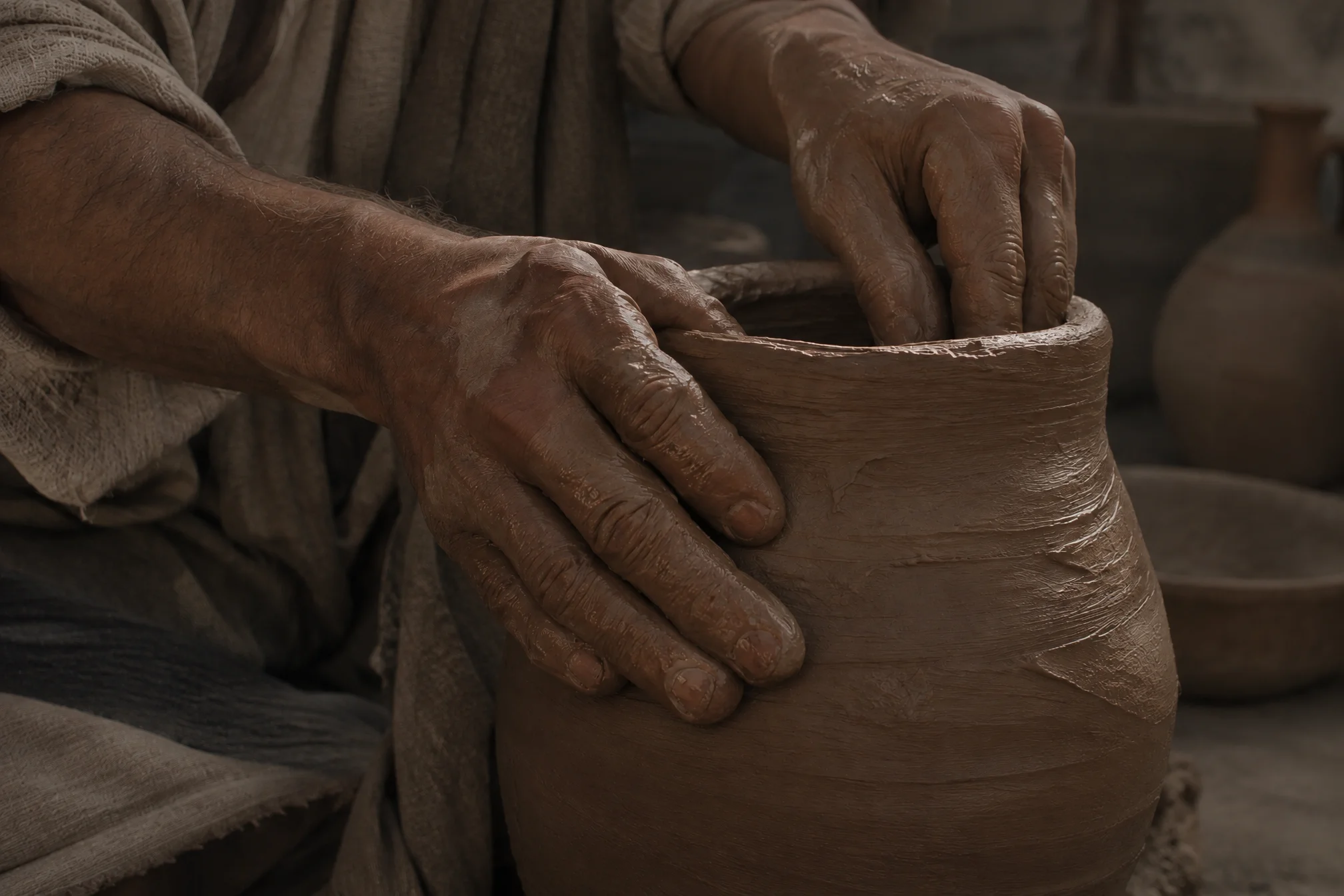
About three thousand years ago, a very rich man looked at all the work he had done in his life. He built houses and planted gardens. He made beautiful parks and pools. He collected silver, gold, singers, and everything fun a person could want. He said he was a builder who "made great works" (Ecclesiastes 2:4).
Then he looked at everything:
"Then I considered all that my hands had done and the toil I had expended in doing it, and behold, all was vanity and a striving after wind, and there was nothing to be gained under the sun." — Ecclesiastes 2:11
Like trying to catch the wind. If you've ever checked how many people looked at your website late at night, you know exactly what he meant.
The Teacher in Ecclesiastes isn't saying the work was bad. He's saying the work couldn't give him the deep meaning he wanted. He wanted his projects to make his life meaningful, but they couldn't. Nothing made "under the sun" can do that.
That phrase, under the sun, is important. It means life is only judged by what we can see, count, and keep. When we look at it that way, everything—every digital picture and every word—eventually disappears.
But the Teacher doesn't stop there. After twelve chapters of honest thinking, he concludes:
"The end of the matter; all has been heard. Fear God and keep his commandments, for this is the whole duty of man." — Ecclesiastes 12:13
In other words, the meaning was never in making things. It was in the One you make them for.
God Cares About Good Work
Here's something that changed how I think about my own work.
The first person in the Bible described as "filled with the Spirit of God" was not a religious leader, a king, or a prophet. It was an artist.
"I have filled him with the Spirit of God, with ability and intelligence, with knowledge and all craftsmanship, to devise artistic designs, to work in gold, silver, and bronze, in cutting stones for setting, and in carving wood, to work in every craft." — Exodus 31:3–5
His name was Bezalel, and God chose him to build the tabernacle, a special tent where God's presence would live among His people. God didn't just want it to work. He wanted it to be beautiful. Gold and blue and purple and red. Carved almond flowers on the lamp. Small design details most people would never even notice.
That tells me something about the God I serve. He cares if things work and look good. He invented both. He looked at what He had made and called it "very good" (Genesis 1:31). Wanting to make something work well and look right isn't bad in itself. It's a small reflection of the Creator in the people He made.
The problem isn't making things well. The problem is when making things well becomes the only reason.
Who Is on the Other Side?
For more than twenty years, I've done this work in many different places. As a Coast Guard photographer. Taking pictures at weddings. Writing computer code for programs I built myself. The tools I used kept changing. But the main question underneath them never did.
And the answer I keep finding is this: there is always a person who will use or see what you make.
A couple who will look at their wedding photos fifty years from now. A reader who finds a story on a night they really needed it. A church or group that finally has a website that helps people find hope instead of a broken link. A small business owner who can stop struggling with their tools and get back to helping their customers.
When I forget that person, the work feels empty. When I remember them, even the smallest detail matters. The words that describe a picture for people who can't see it. The button that's easy to tap with your thumb. The photo that's lit just right. These aren't just good rules to follow. They are ways of showing love to someone you will probably never meet.
Jesus summed up all the rules in two commands: love God, and love your neighbor (Matthew 22:37–39). I've come to believe that doing good work is one of the best ways I know to do both at the same time.
Not a Waste of Time
So what is the point of it all?
It's not for your portfolio. It's not for how many followers you have, or an award, or the satisfying moment when everything clicks, even though I love that moment. All those things are "under the sun," and the sun eventually sets on all of them.
It is for Him. And because it is for Him, it is for them.
Paul wrote it this way:
"Whatever you do, work heartily, as for the Lord and not for men." — Colossians 3:23
And then, to a church that had good reason to wonder if their hard work mattered:
"Therefore, my beloved brothers, be steadfast, immovable, always abounding in the work of the Lord, knowing that in the Lord your labor is not in vain." — 1 Corinthians 15:58
Not wasted. That is the perfect answer to the Teacher's "all is meaningless." What feels like catching wind "under the sun" becomes lasting when it is given to God.
That changes how I use every tool. AI, a camera, a code editor, an email service, social media, a printed page: none of them are the main point, and none of them are beneath the main point. They are all just ways to share a story further, help a person better, and point to a God who deserves the very best work we can give.
Things to Think About
If you make things for a job, or just because you love it, here are some questions I'm asking myself this week:
Who will use or see what I'm making right now? Can I imagine them?
What would change if I made this as a gift to God instead of trying to impress people?
Which tool have I started to think is the most important thing? What would it look like to put it back in its right place?
When have I been trying to get clicks instead of following what God wants me to do?
Ask God to show you. He has a way of answering that question better than any computer report can.
"Let the favor of the Lord our God be upon us, and establish the work of our hands upon us; yes, establish the work of our hands!" — Psalm 90:17
Make it work well. Make it beautiful. And make it for Him.



Comments
I’d love to hear what this story brings up for you.
Loading comments…